Rust Control Flow
1. if expression
fn main() {
    let number = 3;

    if number < 5 {
        println!("condition was true");
    } else {
        println!("condition was false");
    }
}
Rust的if else等expression像python一样不需要小括号, 但是需要大括号而不是冒号,且if接的expression的evaluate的值必须是bool类型,不会像cpp那种非0的值都会被当做true这种
因为if是一个expression,所以可以使用if expression赋值给变量
fn main() {
    let condition = true;
    let number = if condition { 5 } else { 6 };

    println!("The value of number is: {number}");
}
2. Loop expression
fn main() {
    loop {
        println!("again!");
    }
}
loop 是一个expression,对于下面的代码你可能会产生疑问,按照之前的理解在expression结尾加上semicolon之后是一个statement,不会返回值,但是break结尾有semicolon之后还是会返回值
其实这个可以这么理解, break是一个特殊的expression,和return类似,他会跳出当前的域来返回值
fn main() {
    let mut counter = 0;

    let result = loop {
        counter += 1;

        if counter == 10 {
            break counter * 2;
        }
    };

    println!("The result is {result}");
}
下面一个可以展示出正常let就是一个statement, {}就是一个expression,默认最后会返回()
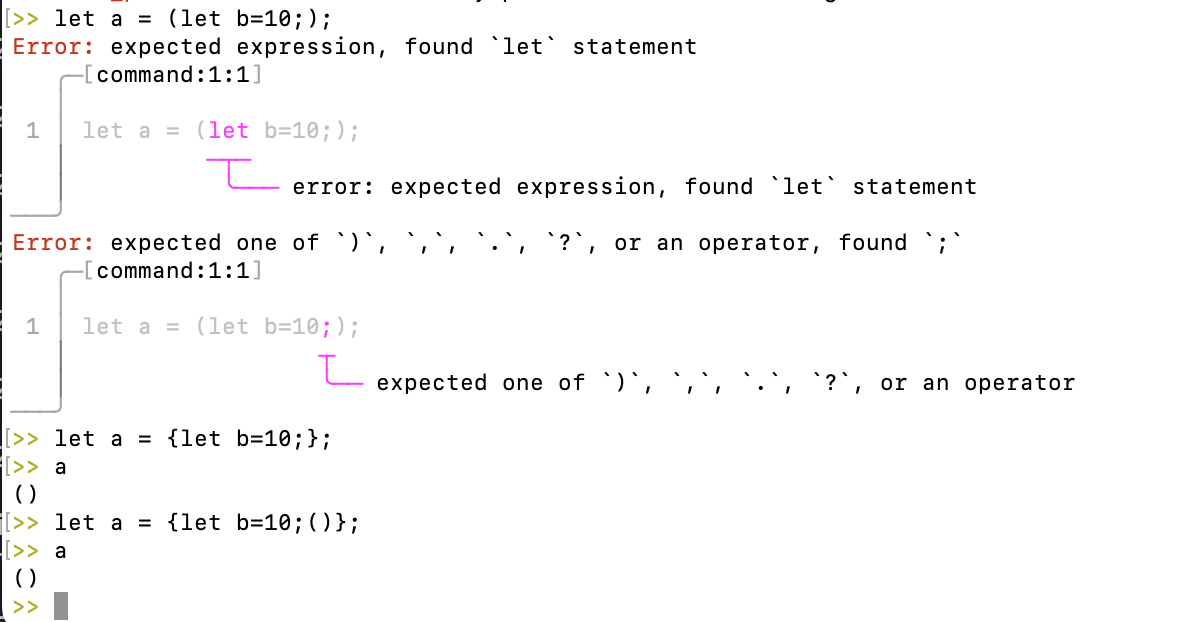
对于嵌套的loop expression,我们可以显示得指定我们需要break那个loop
fn main() {
    let mut count = 0;
    'counting_up: loop {
        println!("count = {count}");
        let mut remaining = 10;

        loop {
            println!("remaining = {remaining}");
            if remaining == 9 {
                break;
            }
            if count == 2 {
                break 'counting_up;
            }
            remaining -= 1;
        }

        count += 1;
    }
    println!("End count = {count}");
}
3. while expression
fn main() {
    let a = [10, 20, 30, 40, 50];
    let mut index = 0;

    while index < 5 {
        println!("the value is: {}", a[index]);

        index += 1;
    }
}
4. for expression
fn main() {
    let a = [10, 20, 30, 40, 50];

    for element in a {
        println!("the value is: {element}");
    }
}
fn main() {
    for number in (1..4).rev() {
        println!("{number}!");
    }
    println!("LIFTOFF!!!");
}
5. if let and let else
if let是match statement的语法糖(Rust1.65前就支持),在只关注一个pattern,忽略其他pattern的时候可以简化代码,使得代码逻辑更加清晰, 注意下面的例子,else的return是提前返回
fn describe_state_quarter(coin: Coin) -> Option<String> {
    let state = if let Coin::Quarter(state) = coin {
        state         // return to state after let
    } else {
        return None;  // return the function
    };

    if state.existed_in(1900) {
        Some(format!("{state:?} is pretty old, for America!"))
    } else {
        Some(format!("{state:?} is relatively new."))
    }
}
let else是Rust 1.65(2022)开始支持,更加简洁
fn describe_state_quarter(coin: Coin) -> Option<String> {
    let Coin::Quarter(state) = coin else {
        return None;
    };

    if state.existed_in(1900) {
        Some(format!("{state:?} is pretty old, for America!"))
    } else {
        Some(format!("{state:?} is relatively new."))
    }
}
let else能替代 if let的场景: ## 模式匹配 + 失败时立即 return、break、panic 等
对于以下场景还是得使用if let
❶ 多分支逻辑:
if let Some(x) = maybe {
    // ...
} else if let Some(y) = other {
    // ...
} else {
    // fallback
}
❷ 非绑定语句:
if let Some(x) = maybe {
    println!("x is {x}");
}
❸ 条件嵌套表达式中的匹配:
let result = if let Some(x) = opt { x + 1 } else { 0 };